How a Thermal Camera Planner Changes Site Surveys and System Design
I remember my first site survey for a perimeter security project in a large warehouse district. The client was fixated on standard security cameras, and honestly, so was I. But after a few nights of reviewing footage that showed nothing but gray, grainy shapes moving through heavy fog, I realized we were missing half the picture. That was the moment I started taking thermal imaging seriously, and it changed how I approach every camera placement decision.
Thermal cameras are not a replacement for conventional security cameras. They are a complement, and in many situations, they are the only way to get reliable detection. But planning where to put them, what lens to choose, and how to balance detection range with thermal sensitivity is a discipline of its own. That is where a good thermal camera planner becomes indispensable. It is not about buying the most expensive thermal unit from FLIR or Hikvision and hoping it works. It is about matching the camera's specifications to the actual environment, the lighting conditions, the weather patterns, and the specific threats you are trying to detect.
Why Thermal Imaging Demands a Different Planning Process
A standard security camera sees reflected light. A thermal camera sees heat. That fundamental difference means that the rules for camera placement change completely. You cannot just swap out a visible-light camera for an ir camera and expect the same coverage. Thermal cameras are less affected by shadows, backlight, and darkness, but they are affected by atmospheric conditions, by the temperature difference between the target and the background, and by the thermal lens characteristics. A thermal camera planner helps you account for these variables before you drill a single hole.
For example, a project I worked on involved monitoring a large fuel storage area. The client wanted to detect intruders at night, but they also wanted to detect leaks or equipment overheating. A standard night vision camera would have been useless in the pitch dark, and a standard thermal camera with too narrow a lens would miss the wide area. We used a thermal camera planner to simulate the field of view for different thermal lens options. The Dahua thermal unit we eventually selected had a 19mm lens, which gave us a good balance between detection range and width. Without that simulation, we would have either overspent on a longer lens or undersized the coverage and left gaps.
Beyond Security: Fire Suppression, Temperature Screening, and Smart HVAC
The use of thermal cameras extends well beyond intrusion detection. In industrial settings, thermal imaging is critical for early fire detection. A thermal camera can spot a hot spot on a conveyor belt or an electrical panel long before smoke appears. Integrating that camera into a fire suppression system requires precise planning. The camera must be positioned to cover the highest-risk areas, and its alarm triggers must be calibrated to avoid false alarms from normal heat sources like sunlight or machinery. A thermal camera planner that includes coverage mapping and thermal sensitivity data can make that integration much smoother.
Temperature screening became a common application during the pandemic, and it remains useful in hospitals, airports, and manufacturing facilities. But a thermal camera used for screening people's body temperature has different requirements than one used for perimeter detection. The camera needs higher thermal sensitivity, usually less than 0.05 degrees Celsius, and it must be placed at a specific distance from the subject. Too far, and the measurement is inaccurate. Too close, and the camera cannot see the full face. A thermal camera planner that factors in these constraints can save a lot of trial and error on site.
Smart HVAC systems are another growing use case. Thermal cameras can detect occupancy patterns and adjust heating and cooling zones accordingly. This is not just about comfort; it is about energy savings and safety compliance. For instance, a large open-plan office can use a ceiling-mounted thermal camera to see which desks are occupied and direct airflow only where needed. The planning here involves ceiling height, lens angle, and integration with the building management system. Bosch and Axis Communications both offer thermal cameras with open APIs that make this kind of integration possible, but the planning still has to be done carefully.
The Real World: Site Survey and Environmental Factors
I have seen too many projects where a thermal camera was installed based on a spec sheet alone, and then the installer had to move it twice because the view was blocked by a tree or the camera kept fogging up. A site survey is not optional. You need to walk the perimeter, note the vegetation, the building materials, the prevailing wind direction, and the sources of heat that could cause false alarms. A thermal camera planner that lets you overlay the camera's field of view onto a map or a 3D model of the site is worth its weight in gold.
IP rating is another factor that often gets overlooked. Thermal cameras are frequently used in harsh environments, outdoors in rain, dust, or extreme temperatures. The camera housing must match the IP rating required for the location. If the camera is near a washdown area in a food processing plant, it needs at least IP66. If it is in a dusty warehouse, IP67 might be better. The thermal camera planner should allow you to filter by environmental ratings and list compatible housings.
Detection Range vs. Recognition Range: The Numbers That Matter
Every thermal camera has a detection range, a recognition range, and an identification range. Detection means the camera can see that something is there, but not what it is. Recognition means you can tell if it is a person, a car, or an animal. Identification means you can see details like clothing or license plates. The numbers depend on the camera's resolution, the lens size, and the thermal sensitivity. A common mistake is to look only at the detection range and assume the camera will be useful at that distance. In practice, you usually need at least recognition range for security applications.
For example, a Hikvision thermal camera with a 640x480 sensor and a 35mm lens might have a detection range of over 2,000 meters for a vehicle-sized target, but the recognition range for a person might be only 400 meters. If you are trying to monitor a long fence line, you need to know that difference. A thermal camera planner that lets you input the target size and see the ranges for detection, recognition, and identification is essential for designing a system that actually works.
Thermal Camera Planner in Practice: A Few Lessons Learned
One of the most useful features of a good thermal camera planner is the ability to simulate different weather conditions. Fog, rain, and humidity all reduce the effective range of thermal imaging. On a humid summer night, the detection range can drop by 30 percent or more. I once planned a system for a port facility where the fog rolled in almost every morning. We had to choose a longer lens than the basic calculations suggested, and we also added a few extra cameras to cover the blind spots. The planner we used was a thermal camera planner that included a weather attenuation model. It saved us from a costly under-specification.
Another lesson: do not forget about maintenance. Thermal cameras have moving parts if they are pan-tilt-zoom units, and they have lenses that can get dirty or scratched. The planning phase should include access for cleaning and servicing. A camera mounted 30 feet up on a pole might be hard to reach. A thermal camera planner that factors in mounting height and service intervals can help you decide between a fixed camera and a PTZ model.
Choosing Between Brands: FLIR, Hikvision, Dahua, Axis, and Bosch
There is no single best brand for thermal cameras. Each has strengths. FLIR has been in the thermal imaging business for decades and offers very high thermal sensitivity and advanced analytics. Hikvision and Dahua are strong on value and integration with their own security ecosystems. Axis Communications has excellent network camera features and open platforms. Bosch offers ruggedized cameras for industrial environments. The choice depends on the project requirements, the budget, and the existing infrastructure. A thermal camera planner that lets you compare specifications across brands is a huge time-saver.
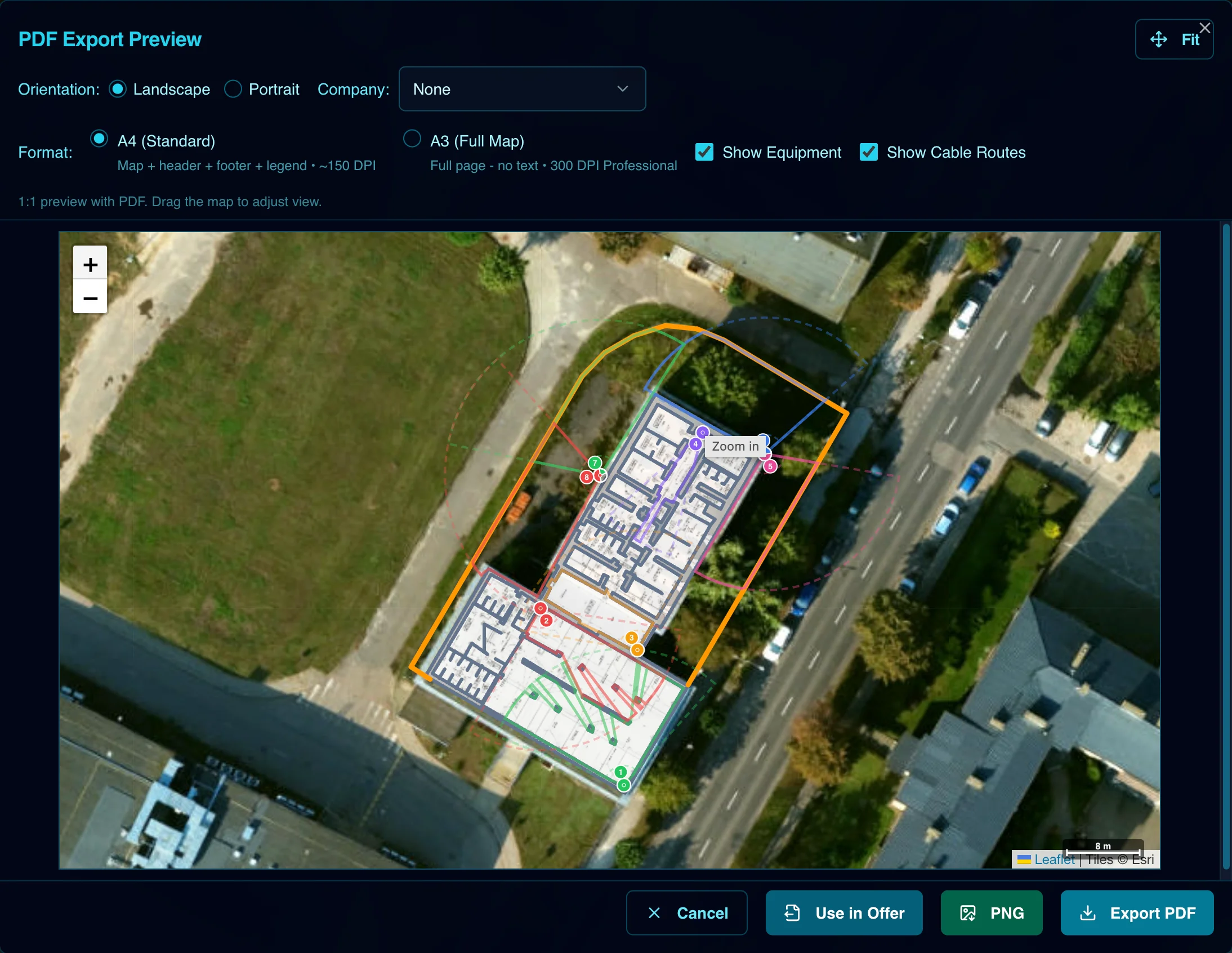
I have used CCTV planner for some of my projects, and it handles the basic layout and documentation well. For thermal-specific planning, you might need a tool that focuses on thermal lens calculations and environmental factors. But the general principle is the same: plan before you buy, and use the best data you can get.
Final Thoughts on Practical Integration
Thermal cameras are powerful tools, but they are not magic. They require careful planning, realistic expectations, and a willingness to adapt to the site conditions. A thermal camera planner that accounts for lens choice, detection range, thermal sensitivity, weather, and mounting constraints will pay for itself many times over in avoided mistakes. Whether you are designing a perimeter security system, a fire detection network, or a smart HVAC zone, take the time to plan the thermal camera placement properly. Your installer, your client, and your budget will thank you.